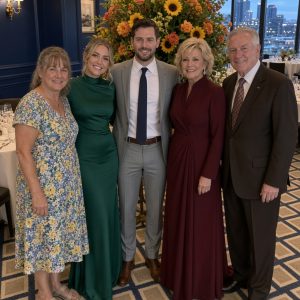
The manager, a composed woman named Ms. Okafor, stopped beside my chair and asked whether I wished to settle my own portion. I said yes, the salmon and one sparkling water, fifty-two dollars. Then she turned to my father and explained, in an even voice, that his wife had phoned on Tuesday and asked to keep a card on file “belonging to our daughter,” a number my mother had memorized when I was a student. That card had been closed for years. Ms. Okafor had declined, written a note in the reservation, and asked the waiter to watch our table. My two whispered sentences had simply asked him to bring her.
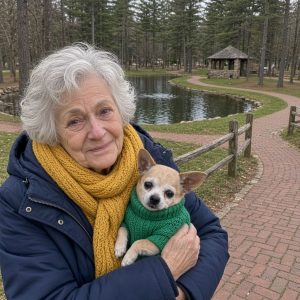
My father’s grin went slack. He muttered something about a misunderstanding, my aunt reached for her purse, and fourteen people discovered an urgent need to check their phones. Ms. Okafor offered to divide the check by guest, one slip at a time, and she did not hurry. I thought of Grandmother Margaret, who taught me that a boundary is only kindness with a spine, and of the lake cottage where I had cried the week I stopped answering calls. I felt no triumph. I felt like a window opening in a room that had been shut for years.
Mateo paid for his lobster, grumbling. My father paid for the wine in silence. At the coat check, my mother caught up with me, tearful, and said she had missed me and never knew how to ask. I believed the missing was real, and I also knew the plan had been real. Both things can be true. I told her she was welcome at the cottage, just the two of us, for tea, and that anything more would need an apology first.
She came in June, alone, carrying a pie she had clearly baked herself. We sat on the dock with our shoes off, and after a long quiet she said it: “We were wrong.” Weeks later, a short note arrived from my father, unpolished and asking for nothing. I answered kindly and without hurry. Love, I learned, does not arrive with an invoice. Peace is not surrender. It is a table where nobody needs to be tricked into staying.