I already knew some of it. I had seen the warning letters in January. For twenty-two years, I had kept the farm’s accounts, and Darrell had managed the planting decisions. Without either of us, the brothers had borrowed against the land to pay my buyout without restructuring anything. They had expected the banker to wait. He wasn’t going to. That was why they’d wanted me gone so quickly. Gene’s son had seen it before he had.
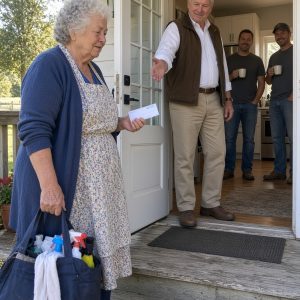
That evening, Gene crossed the road himself, cap in his hands. Brody stood beside his father the whole time. Gene apologized for the luncheon, for the timing, and for never asking how Kenzie and I were holding up. Then he asked for help. I told him I would sit down with the banker and fix their books, on one condition. He would treat me as a partner again, not a widow to be managed.
It took three long meetings at the bank, but I restructured their loan and cut their seed costs by joining their orders with mine. The bank extended their terms through the next harvest. In exchange, the brothers agreed that the old farmhouse would go to Kenzie when she turned twenty-one. Brody chose to rent a room in town instead. Rusty shook my hand on it. He didn’t say much, but he meant it.
Brody worked my ninety-five acres all that summer, and he still helps me every spring. In October, the corn on both sides of the gravel road came in heavy and gold. Gene and Rusty waved from their tractor. I waved back. Kenzie rode in the combine beside me, wearing Darrell’s cap, the brim still too big. When we finished the last row, she looked across the road and said, “Dad would like this.” It felt like home again.