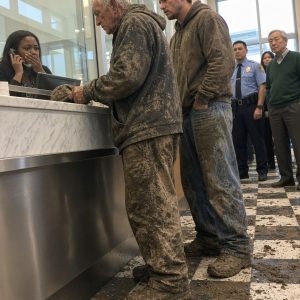
The social worker, Ms. Park, arrived within minutes and asked Brandon to wait in the family lounge with a security guard nearby. Julie explained quietly that she had been a notary for twelve years and had seen these packets before. A placement company called Harbour Senior Services paid relatives a nine-thousand-dollar referral fee for every parent moved into one of its homes, and it supplied the paperwork, which always included a power of attorney, a title transfer, and a care agreement. Brandon had signed up with them three months earlier.
I told them what I had never told anyone. After Walter died, Brandon sold his truck and the lake lot, and I let it go because I was grieving. He had also been taking money from my savings with a card I gave him for emergencies, nearly sixty-two thousand dollars in two years. He had put it into a restaurant that failed and hidden the loss. If I moved into a facility and the house passed to him, no one would ever ask where the money went.
Ms. Park called a lawyer from the hospital’s patient advocate list, Mr. Haddad, who came that afternoon and reviewed every page. He confirmed that I had full capacity, then helped me cancel the card, revoke every authority I had given Brandon, and sign a new power of attorney naming my niece Rosalind. The bank flagged the withdrawals, and the Harbour deposit was refunded after Julie reported the packet to the provincial authority. When Brandon came back into the room, red-eyed, he said he had been drowning. He did not argue.
I did not press charges. I made Brandon sign a repayment agreement for the sixty-two thousand dollars, and I told him that when he proved he could keep it, I would speak to him as my son again. Julie visited the day I went home, carrying a paper bag. Inside was a winter coat, still tagged. “It’s from the lost and found,” she said, and we both laughed until I coughed.