I did not name what I heard. I want that clear, because the version I told myself that night was that I was protecting Juniper, and I have had to be honest with myself since.
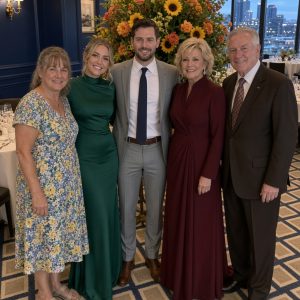
I raised my glass and I said that Vivienne, my daughter, Juniper’s mother, would have wanted her little girl in every photograph taken of this family, in this life and any that came after, and that a child who loses her mother at two should never, ever be told there is a girl more important than her. I said it looking directly at Delphine. The room understood exactly what it meant. Delphine’s face went white. Rowan’s went whiter.
I sat down feeling righteous. I felt righteous for about three weeks.
Here is what I did not know when I stood up.
Delphine had lost a child. A daughter, at four, to leukemia, eleven years before she met Rowan. She had never told Juniper, and she had barely told Rowan. What she said in that dressing room was not cruelty from a woman who did not care about children. It was the panic of a woman terrified of loving another little girl and losing her too, said badly, in a moment when the fear got louder than her sense. It was wrong. It was a terrible thing to say to a grieving five-year-old. And it came from the same grief I had spent three years drowning in myself.
I found this out because Rowan came to my house in the spring and told me, quietly, that his marriage was struggling under the weight of a toast his wife could not recover from. That six hundred people now looked at Delphine as the woman who tried to erase a dead mother’s child, and that only three people alive knew she had buried a child of her own.
I had humiliated a woman for her worst sentence without knowing her worst loss.
I apologized to Delphine. It took me two visits to manage it. She apologized to Juniper, kneeling on my kitchen floor, and told her about the little girl she lost, in words a five-year-old could hold. Juniper, who is braver than all of us, asked if they could put that little girl’s picture in the family photos too.
They are still married. It was closer than anyone knows. Juniper has two mothers in her stories now, the one who died and the one who was too frightened to love her at first, and a photograph on the wall of a child she never met.
I got my grand toast. The room went silent, exactly as I wanted. And it is the thing I am most ashamed of in my old age, because being right in that room nearly cost my granddaughter a second mother, and I never once, standing there with my glass raised, wondered what that frightened woman had lost before she said the words I would not forgive.