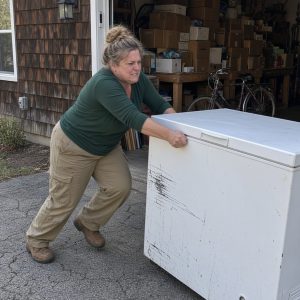
My mother produced nothing. She produced a lot of volume instead. The coordinator waited her out, then asked the driver for the moving contract. That was where it came apart. The pickup address was not my parents’ house. It was Marisol’s rental in Bozeman, and the contract was dated six weeks earlier. They had given notice in September. My sister had let a lease lapse on the assumption that I would fold, because I always had.
She admitted it standing between the minivan and the truck, with her children listening. She said she had told the kids about the upstairs room in October. She said Mom promised it would be fine. Then she said the sentence that ended something in me: “You don’t have a family to think about, Juniper. We do.”
I had them removed from the property in writing that morning, which the coordinator handled without anyone raising their voice. Then I did one thing nobody expected. I paid for a month at an extended-stay place in town, in Marisol’s name only, and I handed her the receipt. Not for her. For Rafferty and Talia, who had not planned any of it and had spent a cold morning watching adults shout.
That was the last money I ever gave.
My mother called for eleven straight days. Then she stopped, and the silence lasted through winter, which was the first quiet winter I had ever had. My father wrote in February. Three pages, mostly about the two thousand dollars, which he had apparently been counting as a down payment on my entire adult life.
Marisol found a place in March. In June she drove up alone and asked if the kids could see the pines. I said yes, and I meant it, and she did not bring one box.
I turned the upstairs room with the big window into what it was always going to be. A place to work. Desk facing the trees. Nobody sleeps there.
For thirty-four years I was the family’s spare room, the reliable one, the one whose life had extra space in it. What I learned on that driveway, keys in one hand and deed in the other, is that a door with your name on it is not selfishness. It is the first honest sentence some of us ever get to say out loud.