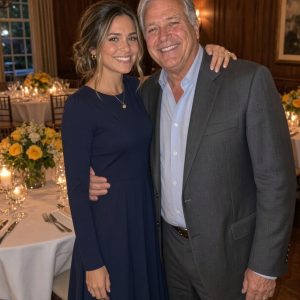
For years I believed my childhood visits to my grandfather were nothing more than sweet, simple rituals between a girl and the man who adored her. I cherished our quiet afternoon walks, the way he patiently followed my lead, and the way he treated a tiny glass of grape juice like the finest champagne. I thought I was the one making him feel less alone, his companion and gentle guide. I never realized that every time he looked at me he was terrified of losing the only thing that still mattered. Years after he passed, a discovery about his hidden struggle with memory loss shattered my perception of the past. That piercing gaze I had mistaken for pure affection was the desperate determination of a man fighting a losing war against his own dissolving mind. He was not just watching me. He was recording me, working with every ounce of remaining strength to ensure his grandchild would not become another nameless face lost to the fog.
Those afternoon walks I had remembered as aimless explorations were actually a lifeline. He was not following me because he was tired. He was following me because I was the only compass he had left. Whenever I darted into the woods or ran ahead, he watched with hyper-focused intensity, silently memorizing the way my hair caught the sunlight and the specific cadence of my laughter. He knew his window of recognition was closing. He had to pack a lifetime of grandfatherly love into those small moments before the abyss took the rest. Even the grape juice ritual took on a different meaning. It was not merely a mid-afternoon snack. It was a carefully constructed medical routine, masked as a celebratory party so I would not be frightened by his rigid need for structure. He made it an occasion because he could not bear to let me see him as a patient. He wanted me to associate him with sweetness rather than the slow decline he endured entirely in private.
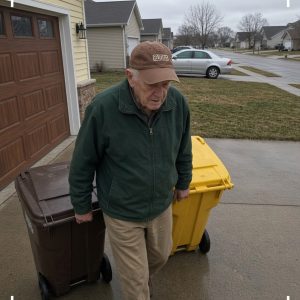
Looking back, the house itself feels like a quiet mausoleum of sacrifices. He always wore the same sweater, sat in the identical chair by the window, and greeted me with a precise sequence of questions. At the time I thought it was the charming predictability of an elderly man. Now I understand he was using repetition as his only weapon against the encroaching silence. He asked how school was and whether I liked my teacher every single week because he was terrified that if he stopped, the pathways would collapse. He was anchoring himself to my reality with verbal rituals, hoping that if he kept asking and I kept answering, he would keep existing. For a long time after the funeral I blamed myself for childhood obliviousness, for not being old enough to hold his hand when he was truly struggling. That regret has softened into gratitude. His love was not loud. It was a whisper—patient, humble, and fiercely protective. He carried the weight of his vanishing identity on his own shoulders so my childhood could remain light and untouched.
There is a profound quiet power in the way he managed his end. He turned his private tragedy into a series of beautiful shared memories. He did not want my pity. He wanted my joy. The greatest gift he left was not a bank account or an heirloom, but a bank of warm memories that would stay lit even when his own mind went cold. He wrote his final letter to me in the form of grape juice and garden walks. Now when I think of him I do not only see the frail man in the chair. I see the warrior who fought a losing battle with everything he had so his granddaughter would not remember him as broken. I finally understand that he was the one guiding me, not the other way around. His life did not end in a shout of confusion. It ended in a whisper of enduring affection. In that silence I have finally found the peace he worked so hard to give me.