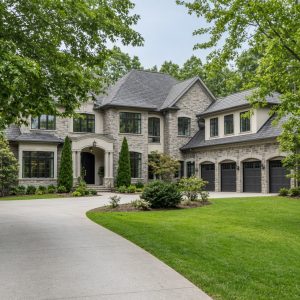
The locksmith stopped before the sheriff arrived. He asked for proof of ownership, the way any licensed one will, and my father produced a listing agreement instead of a deed. That agreement is how I learned the rest. My brother Caleb had signed it eleven days earlier as the seller, using a legal description he had copied out of an old probate file, because our grandfather’s original parcel had carried a similar number and my father had convinced himself, and then the realtor, that the foreclosure I bought was family land returning to the family. It was not. It had never belonged to us. It had belonged to a bank since 2019 and to me since March.
The sheriff took eleven minutes to come up the road and about ninety seconds to read the recorded deed off his own phone. Nobody was arrested that morning. The realtor withdrew the listing before she left the property and reported it herself, which cost Caleb his licence to sell anything for three years.
My father never apologised. What he did instead, in the spring, was mail me a photograph. It was my grandfather standing in front of a fence line in 1974, and on the back, in my father’s handwriting, one line saying he had always assumed I did not want any of it. That was as close as he could get, and I have decided to let it be enough.
Caleb wrote in August. He is the one I talk to now, carefully, every few months. He has never asked me for anything since.
I run forty head. The sheriff, whose name is Wendell, comes out twice a year and has never once needed a reason.
My stepmother still sends a card each Christmas addressed to the ranch. I put them in a drawer.
I spent thirty years waiting for a chair to be set out for me at somebody else’s table. I stopped waiting, and I built one, and then the same people who never made room came to take it, and the paperwork held because it was mine. Belonging was never something they had the authority to grant. It turns out it was only ever mine to build.