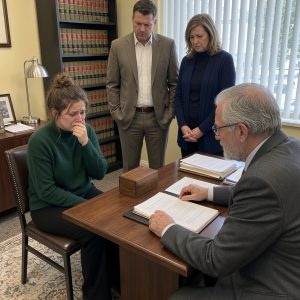
I was forty-two when my father died, and caring for him had become the rhythm of my life. Eight years of hospital visits, medication schedules, sleepless nights, and quiet conversations when his pain would not let him rest. I put relationships, career growth, and even the idea of a family of my own on hold. I told myself there would be time later. My younger sister, Emily, had a busy job, a husband, and two young children. I never blamed her for not being there more. At least that is what I told myself. After he died, the four-bedroom house felt unbearably quiet. A week later, in the lawyer’s office, I sat with my hands folded and already at peace with expecting nothing. When the lawyer said the house—the only real asset—went entirely to Emily because she had children, I nodded. It made sense. I loved him too much to turn his last wishes into a battlefield.
That afternoon I packed and left. No drama. No tears in front of anyone. I moved into a small apartment across town, clean and empty in a way that felt almost fitting. For the first time in years there was no one calling my name in the night. I did not know what to do with that silence. Three days later Emily called, frantic and almost unrecognizable. I needed to come now. I drove without asking more. I found her on the floor of Dad’s bedroom, pale, clutching a piece of paper. She swore she had not known. It was a legal clause attached to the will. If she kept the house, she had to pay me fifteen hundred dollars a month for the rest of her life. If she failed, ownership would be revoked.
She handed me a letter in his careful handwriting. My oldest had cared for him with more kindness than anyone would ever know. He wanted her future safe. This was not punishment. It was a bridge. Money creates contact. Contact creates healing. Healing creates family again. For eight years I had thought he had not noticed, that my sacrifices had simply blended into the background. He had seen everything. Emily sobbed that she had been selfish, that she had told herself I had it under control and had barely asked how I was. She did not deserve my forgiveness. She asked if she could earn it.
That was two years ago. She has never missed a payment. The money is not what matters most. Every month she calls before she sends it. Sometimes we talk about bills and the kids. More often we talk about everything we lost and everything we are trying to rebuild. I visit more now. Her children run to the door and shout my name as if I have always been part of their world. Maybe now I finally am. Dad did not only leave me financial security. He gave my sister a reason to reach for me. Month by month, call by call, she did.