When my nana passed away, the grief came in waves. She had been my safe place, the one person who never made me compete for love. The fifty thousand dollars in her will did not feel like a windfall. It felt like her—careful, intentional, protective even in death. I sat on my bed with the letter trembling in my hands and thought of the twenties she slipped me for lunch and the notes she tucked into my bag. This was her final note. I promised myself I would treat it that way. No drama. No waste. Something steady, the way she would have wanted.
For about a week that promise held. Then my stepmom called me into the kitchen with the soft smile that always made everything sound reasonable. It did not seem fair, she said, for me to keep all that money. Her kids were my siblings too. Surely nana would have wanted everyone included. I kept my voice calm. She had made her decision, and I wanted to respect it. There was a pause. Then she smiled too quickly and said she understood. It did not feel like understanding. It felt like a door closing. My dad sat at the table the whole time and said nothing. Not then. Not later that night. His silence settled heavier than any argument.
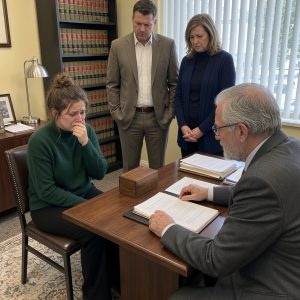
A week later a lawyer’s letter arrived. Inside was a notarized power of attorney with my name and my signature. I had signed it at eighteen. I could still see that day—the dining table, my father explaining it was just a precaution in case of an emergency. I had trusted him completely and then forgotten. When I confronted him, he did not deny it. He sighed as if this were a misunderstanding. I needed to think about what was right. My step-siblings were family too. I asked if using a legal document against me was right. His tone hardened. He was only reminding me that he could step in if necessary. The money could be managed differently, more fairly. That was when I understood. This was not fairness. It was pressure. Control. Leverage.
That night I sat alone with the letter and one clear thought. My nana had trusted me. She had made a deliberate choice, and the people closest to me were trying to undo it by cornering me, not by asking. I remembered her voice telling me to stand my ground even when it was hard. I hired my own attorney, revoked the power of attorney, and kept the gift exactly as she wrote it. I was not wrong for honoring her. I was finally learning how to protect myself—even if it meant losing the people I had thought would always protect me instead.